

So, you’re wondering about corgis and if they’re good with cats.
You’re probably thinking of adopting or buying a corgi.
But you’re not sure if Fido will get along with Oliver.
In this article, we’ll talk about:
- Safety precautions of allowing a cat and your corgi to interact
- Different ways to predict if your corgi will accept a cat, or if a cat will accept your corgi
- How to gauge behaviors and what to look out for when socializing them
- Signs of a corgi that’ll likely get along with cats (and cats that get along with corgis)
- Socialization of your corgi to kittens
- How to introduce a corgi to your cat
- And other FAQs
By the end of this guide, you should be able to have a solid understanding of whether or not corgis are good with cats, how to get them accustomed to each other, and signs/behaviors to help you out during the socialization period.
And if you have any questions, post a comment below!
Sound good? Let’s get your corgi a new feline friend!
Table of Contents
Safety first
Note that behavior between cats and corgis is unpredictable, even for established relationships between the two species.
You should always consult a professional animal behaviorist for advice BEFORE allowing them to interact with each other.
The material here solely is to be used for educational advice and is NOT intended to be a program or substitute any advice of any degree whatsoever for your pets.
Do NOT proceed without consulting a certified animal behavioralist.
Doing so could lead to serious harm, physical trauma, mental trauma, or other consequences to your pets that could be irreversible. You assume complete responsibility and full liability for your actions. Proceed at your own risk.
Corgis and cats can turn on each other in a split second, even if they’re friendly with each other for extended periods.
ALWAYS exercise caution using controlled environments and under 100% supervision with a capable and competent trainer.
Are corgis good with cats? – Corgi and cat compatibility

Corgis are known to be very protective dogs to their entire family.
They’re not generally one-owner dogs and will bond with all family members equally.
They’re bred for herding farm animals, which is why they make awesome exercise partners or guard dogs to protect the home. So they’ll often round up family members all into one room- it drives them crazy if you’re all separated.
Otherwise, how does this relate to cats?
Because if you adopt a corgi that’s already an adult, you may be bringing home a dog that’s highly aggressive or evasive towards cats.
You don’t know the history of how it was raised, and you don’t know if cats are a positive or negative stimuli to it. This can be a problem.
I already have a cat, but I’m planning to get a corgi

If you already have a cat and you’re thinking of adding a corgi to the family, the best way to do this is to adopt or buy a corgi when it’s young.
Early socialization to cats, people, sights, and sounds is critical for a well-behaved corgi.
This breed is known for its herding abilities and strong dominant traits to bark and nip at other animals (including humans) to get them moving.
After all, that’s what they’re bred for. Genes tell a story.
This is why adopting a corgi can be tricky if you already have a cat.
A corgi that never grew up around cats may have an aggressive or frightened reaction when you introduce them to each other.
While it’s not impossible to get the two accustomed, it can be difficult if the dog is older.
That’s why starting with a young puppy (8-12) weeks makes socialization easier to cats, but only if the process is done correctly.
The dog must have a positive experience with the cat or else things can go awry.
Even then, some corgis may never be able to be calm and relaxed around felines as they enjoy the thrill of herding and chasing other species.
And then you also have to consider the fact that cats may also be a wildcard.
Even if your corgi accepts the cat, the cat may not accept the corgi! There’s a lot of factors at play so there’s really no telling what’ll happen.
I have a corgi, but I’m planning to get a cat
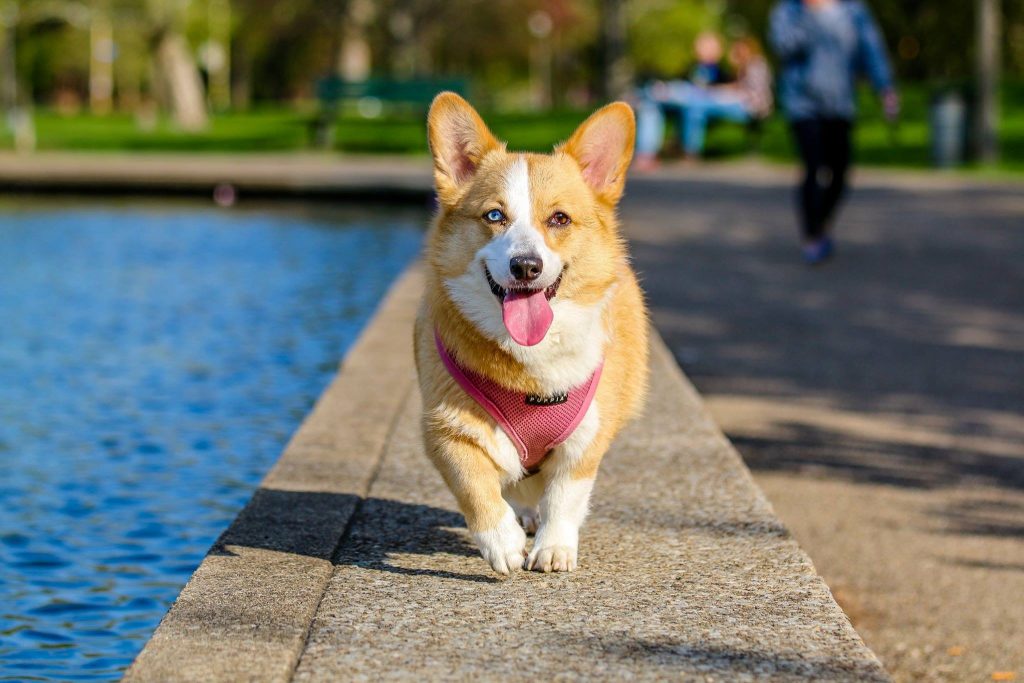
Corgis can be very territorial as they have a protective nature.
After all, they were used to protect entire acres of farmland and herd animals back in Wales.
Because of this, a new cat added to the family may be a threat to your corgi’s existing territory.
And this will cause aggressive behavior from your dog. This makes it difficult to gauge how your dog will respond to the new feline in the family.
And to make matters even more complex, if the cat is still a kitten, the cat may experience a negative reaction to the dog and this can lead to unpredictable behavior. If your corgi is older, territory and behavior patterns are already established.
This is a bad time to add a cat to the family, unless you know your dog has been socialized to cats. If not, they MUST be controlled when they first meet each other.
You already have a routine built with your dog and once the cat starts taking up your precious time together that was once all Fido’s, things can start getting ugly.
Excessive barking, whining, or abnormal behavior are all to be expected.
Do corgis and cats get along?
There is no absolute answer for this and it entirely depends on both the cat and corgi’s personalities. And there’s no way to tell if cats and corgis are compatible.
But the major deciding factor? Early socialization.
Getting a corgi as a puppy is the best time to introduce him to your cat.
When the dog is still young, they’re more accepting of everything.
You could even train your dog to let her be the dominant one in the household! This is the highest chance of success you can possibly get.
Early socialization matters

Adopt or buy the corgi as a puppy and always use positive, controlled associations when they interact with each other.
Remember that this critical, “magical” period only allows for the first 16 weeks (4 months) of your dog’s life.
After this window expires, it’s very difficult to get your dog accustomed to anything- especially a new household member that’s an entirely different species.
If this isn’t an option for you (maybe the corgi is older), it’s not impossible.
You can inquire about the history of the dog:
- Has he previously been raised around cats or other animals?
- Has socialization work been done already?
- Does he have a submissive or docile personality?
If the answer is a resounding “no” to all, you can still try by setting up a controlled environment and using best practices to introduce your corgi to your cat.
Even if you adopt a corgi that’s on the older side, it can still be perfectly happy with a cat companion.
There are examples of this all over the ‘net:
Depending on the corgi’s personality, he may accept the cat and become best friends and do everything together, just like you see in the movies.
So don’t be discouraged if you plan on adopting an older corgi and you have a cat.
Or if you already have an adult corgi and you want to adopt a kitten. It goes both ways.
Rules, tips, and tricks

There are some tips that definitely help the process of getting the two species to get accustomed to each other.
Like any other habit-building methodology, it’s best to start early in your dog’s life as a puppy.
Even better, get a puppy and a kitten at the same time for the highest chance of success.
Here are some rules to drill into your corgi’s behavior:
The cat is off limits
You should never let your dog chase the cat.
Discourage this behavior by disciplining your corgi at an early age to lay down the foundation and set up good habits.
Don’t allow aggressive behavior
Any signs of aggression that the corgi exhibits should be controlled and assessed.
Find out what’s causing it. Is it something that the cat’s doing? Or is just the corgi’s natural behavior?
See if there’s a remedy to correct it. This can be tricky, so you may need the help of a licensed dog behavioral specialist.
Always use positive association
When the corgi and cat are allowed to play with each other, always make it positive.
Use treats, praise, and rewards for good behavior.
Try to match personalities
A calm, relaxed cat should be paired with a relaxed dog.
Don’t try to match polar opposites because this makes them unfit for each other.
Discourage negative behaviors
Separate them immediately when negative, unwanted behaviors are shown.
This goes for both of them. If your corgi gets too aggressive during playtime, separate them right away. This will teach the dog that “doing this bad behavior ends playtime.”
Corgis are smart dogs and will learn quickly, but you must separate them right when the behavior takes place. They learn by association and the window to show a cause and effect relationship between behavior and consequence only lasts a few seconds.
Know their personalities
You need to know both your cat and dog’s individual personalities.
One may be used to the other’s species from previous exposure, but the other could be seeing them for the first time.
This could lead to preventing unpredictable behaviors by obtaining this knowledge beforehand.
Check the dog’s focus
See where your corgi’s attention is being directed to.
Dogs that are only staring or dead set on watching the cat could be nothing but trouble for you and your cat.
Your dog could be waiting and timing his attack.
Don’t let your dog loose. Use a confined area or secure leash. He could pounce on the cat as soon as you unleash him.
Don’t be fooled by his temporary behavior while constrained on the leash.
After all, corgis are smart and can manipulate their owners, especially first-time corgi owners. The same can go for the cat. Aggressive cats that snarl, hiss, and swipe can be dangerous to your corgi.
See if there are changes in behavior
Check to see your cat’s diet changes.
Eating less could be a sign of stress or illness, which can be because of the dog. If she stops drinking, eating, constantly hides, or shows some other changes in behavior, this is a sign that your cat warrants a vet checkup.
The same goes for your corgi. If he suddenly has a change in diet, exercise, weight, or behavior, you’ll want to get him checked out by a professional, especially if the change lasts more than a few days.
When they first meet each other, changes in behavior is to be expected.
However, ongoing changes that don’t revert to “normal” levels could be a sign of sickness or stress.
Seek a professional animal behaviorist or veterinarian for help.
Watch for danger
Corgis that chase, pin, or lunge at cats already show very negative behaviors. You may never be able to get them to associate with each other.
Snarling, growling and barking are all signs that your corgi would prefer to be alone. The same goes for a cat that growls, scratches, or tries to flee constantly from your dog.
Don’t force things. If it doesn’t work out, then it doesn’t work out.
Mind the chasing
Dogs love to chase, especially corgis. If your corgi chases a cat that constantly runs away, this can be a repeated trigger for the dog to constantly chase the cat away.
You want to stop the behavior right away before he keeps doing it over and over. Cats can also exhibit chasing to dogs, so it’s not only the corgi’s fault.
Only allow interaction within controlled environments
This goes without saying. They should only be able to make contact, play, or otherwise see each other when the environment is controlled.
A “controlled” environment means:
- You can easily step in and intervene to stop bad behavior
- Both the dog and cat can easily escape
- There’s always at least one person supervising their interaction (two if possible- one for each species)
- This can be done through the use of crates, perches, x-pens, and more.